
Featured
Featured
Featured
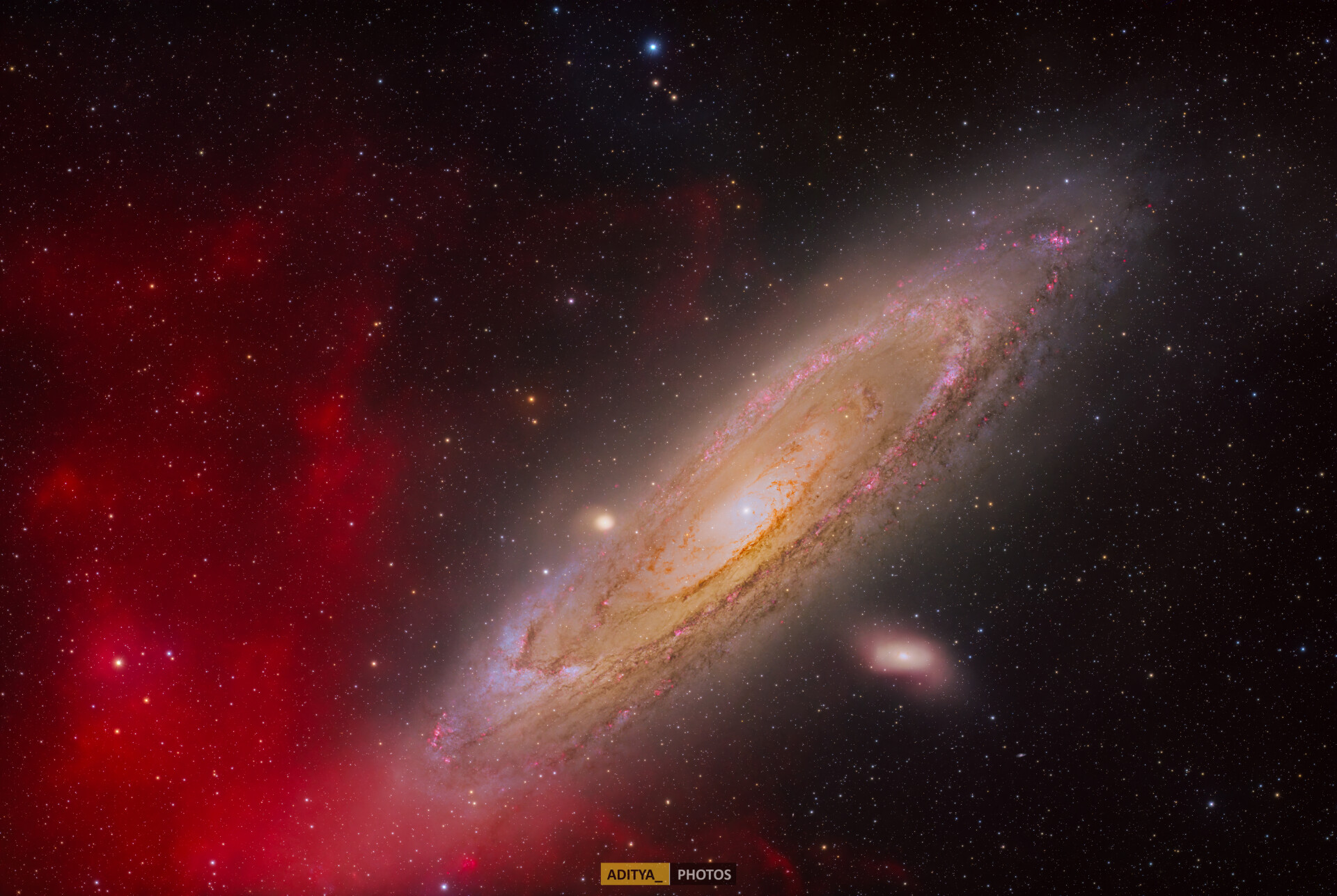
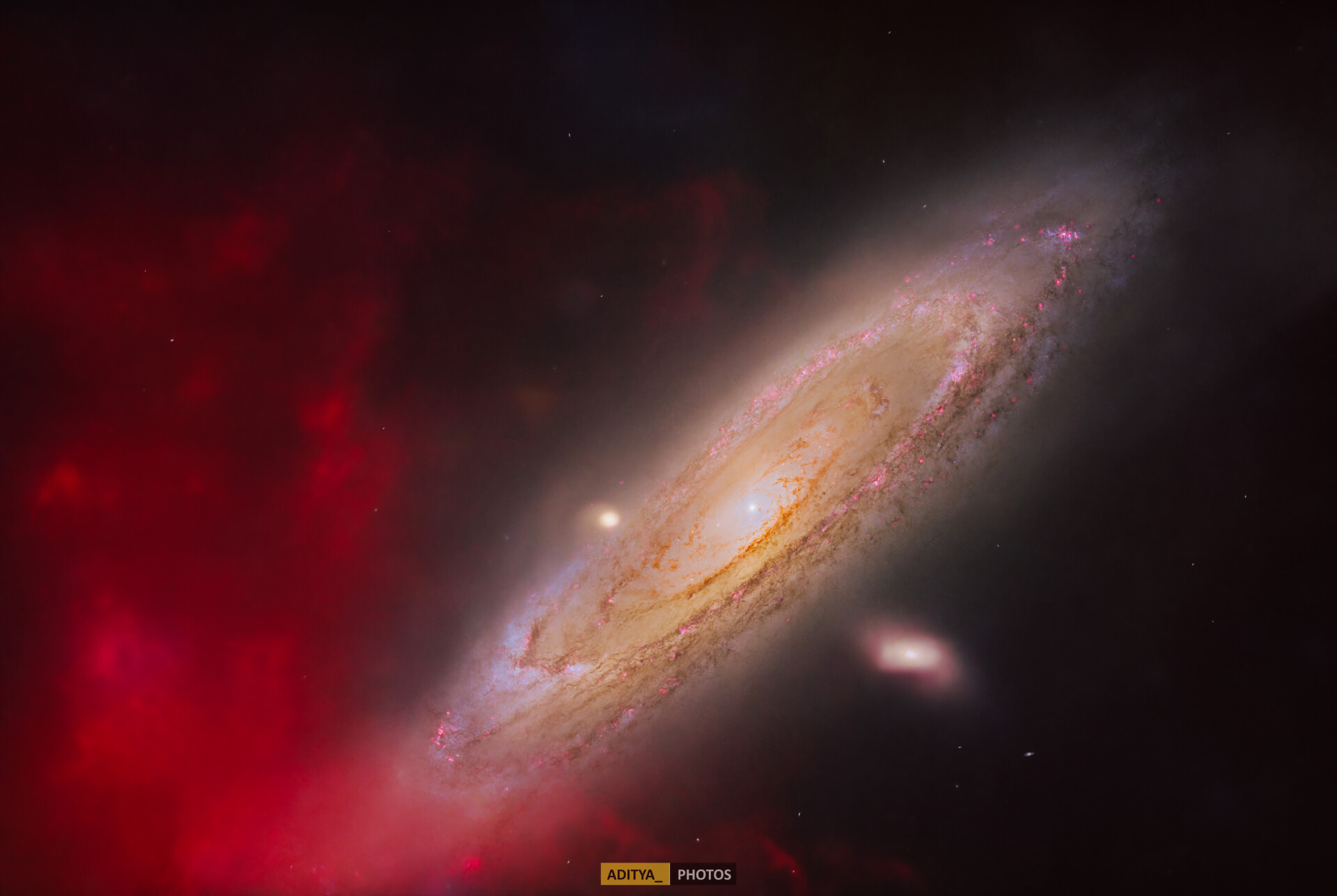
M31 [LRGB-Ha]
Photographer
南方天文远程台·奇台站
M31,即仙女座星系(Andromeda Galaxy),亦称NGC 2207,是位于仙女座方向的一个棒旋星系,属本星系群中质量与尺度最大的成员,距离地球约250万光年,视直径约3.2度,为肉眼可见的最遥远天体之一。其形态分类通常记为SA(rs)b,具有明亮的中央核球、延展的盘状结构以及多圈旋臂与尘埃带,整体呈倾斜视角观测,盘面与视线方向成约77度夹角。
在LRGB叠加氢阿尔法(Ha)波段的成像中,M31的结构特征得以分层呈现。星系核心表现为高表面亮度的黄白色核球,由大量年老的星族恒星构成,其内嵌一条沿主轴延伸的尘埃带,吸收背景星光形成暗褐色纹理,标志着星系中心存在弱棒状结构。核球外围为低亮度的弥散星系晕,由稀疏分布的恒星与球状星团组成,在图像边缘以淡褐色雾状辉光显现。
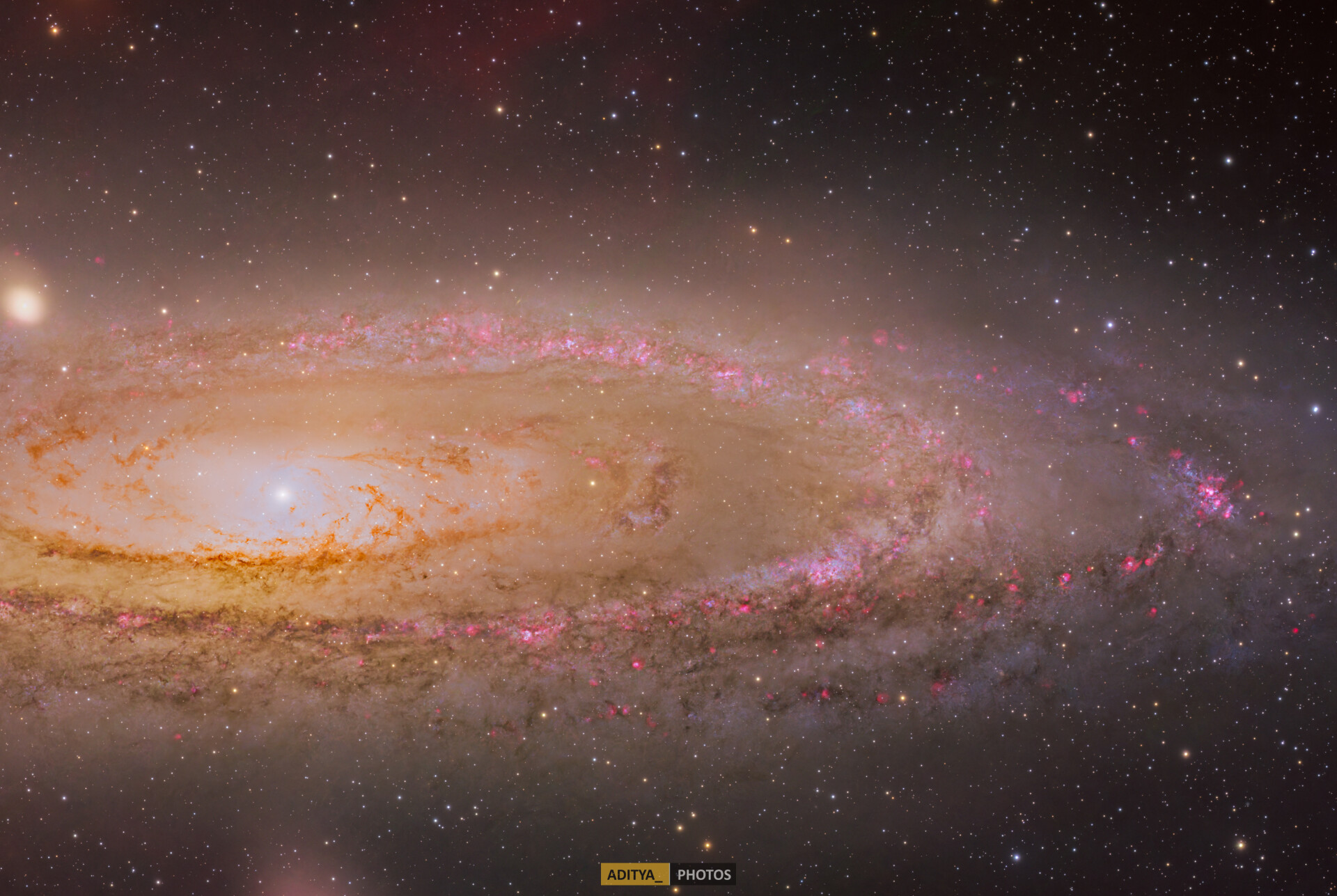
旋臂系统是M31最显著的特征。在可见光波段,旋臂呈蓝白色,对应年轻炽热恒星与反射星云;而Ha通道的引入使电离氢区(H II区)以粉红色至品红色的点状与链状结构突出显示,这些区域是恒星形成活跃的标志,密集分布于旋臂的尘埃脊线之上,勾勒出旋臂的走向与分叉。盘面上还散布着若干暗星云与星团状致密结构。
图像中同时记录了M31的两个主要伴星系:其一为形态紧凑、呈椭圆光斑的M32,位于星系盘边缘一侧,属致密椭圆星系;其二为更弥散、呈扁椭圆状的M110,二者均受M31引力束缚。前景中分布的明亮点源为银河系内恒星,部分带有衍射星芒,与背景星系无物理关联。M31正以约每秒110公里的速度向银河系靠近,预计约40亿年后将与银河系发生并合。(AI genrated auto text)
M31, also known as the Andromeda Galaxy (NGC 224), is a barred spiral galaxy located in the direction of the constellation Andromeda. It is the most massive and largest member of the Local Group of galaxies, lying approximately 2.5 million light-years from Earth. With an apparent angular diameter of about 3.2 degrees, it is one of the most distant objects visible to the naked eye. Its morphological classification is generally designated as SA(rs)b. The galaxy features a bright central bulge, an extended disk, and multiple spiral arms interspersed with dust lanes. It is observed at an inclined angle, with its disk plane tilted approximately 77 degrees relative to our line of sight.
In images combining LRGB data with the hydrogen-alpha (Ha) wavelength, the structural features of M31 are revealed in distinct layers. The galaxy's core appears as a high-surface-brightness, yellowish-white bulge composed primarily of older stellar populations. Embedded within it is a dust lane extending along the major axis, which absorbs background starlight and creates dark brown patterns, indicating the presence of a weak bar-like structure at the galaxy's center. Surrounding the bulge is a faint, diffuse galactic halo composed of sparsely distributed stars and globular clusters, appearing as a subtle brownish, nebulous glow toward the edges of the image.
The spiral arm system is the most prominent feature of M31. In visible-light images, the arms appear blue-white, corresponding to young, hot stars and reflection nebulae. The addition of the Ha channel highlights regions of ionized hydrogen (H II regions) in shades of pink to magenta, appearing as scattered spots and elongated chains. These regions indicate active star formation and are densely concentrated along the dust lanes within the spiral arms, tracing their structure, direction, and branching patterns. Several dark nebulae and compact, cluster-like structures are also scattered across the galactic disk.
The image also captures M31's two principal satellite galaxies. The first, M32, is a compact galaxy with an elliptical appearance, visible as a small, concentrated patch of light near one edge of the galactic disk. It is classified as a compact elliptical galaxy. The second, M110, is more diffuse and has a flattened, elliptical appearance. Both galaxies are gravitationally bound to M31. The bright point sources scattered across the foreground are stars within the Milky Way, some displaying diffraction spikes, and have no physical association with the background galaxy.
M31 is currently approaching the Milky Way at a velocity of approximately 110 kilometers per second. It is expected to undergo a galactic merger with the Milky Way in approximately 4 billion years.
Equipment
CameraToupteck 2600 mono
Telescope/LensSkyRover 70SA V4
MountAz EQ6 GT (Japanese Version)
FilterScorpio LRGBSHO 3nm
Shooting Data ( Shooting Date: 2026-11-03 )
Total FramesN/A
Exposure23 Hours [L:9h, RGB: 6h; Ha: 8h]
Other InfoSoftware: NINA, APP, Pixinsight, Photoshop and Lightroom
Sky Coordinates
Right Ascension (RA)00h 43m 45.5s
Declination (Dec)+41° 03′ 36.1″
FOV Radius2.2879° (137.28′)
Pixel Scale2.737″/px
Rotation Angle273.65° E of N (Clockwise)
Parity正像
Comments (0)
No comments yet.